


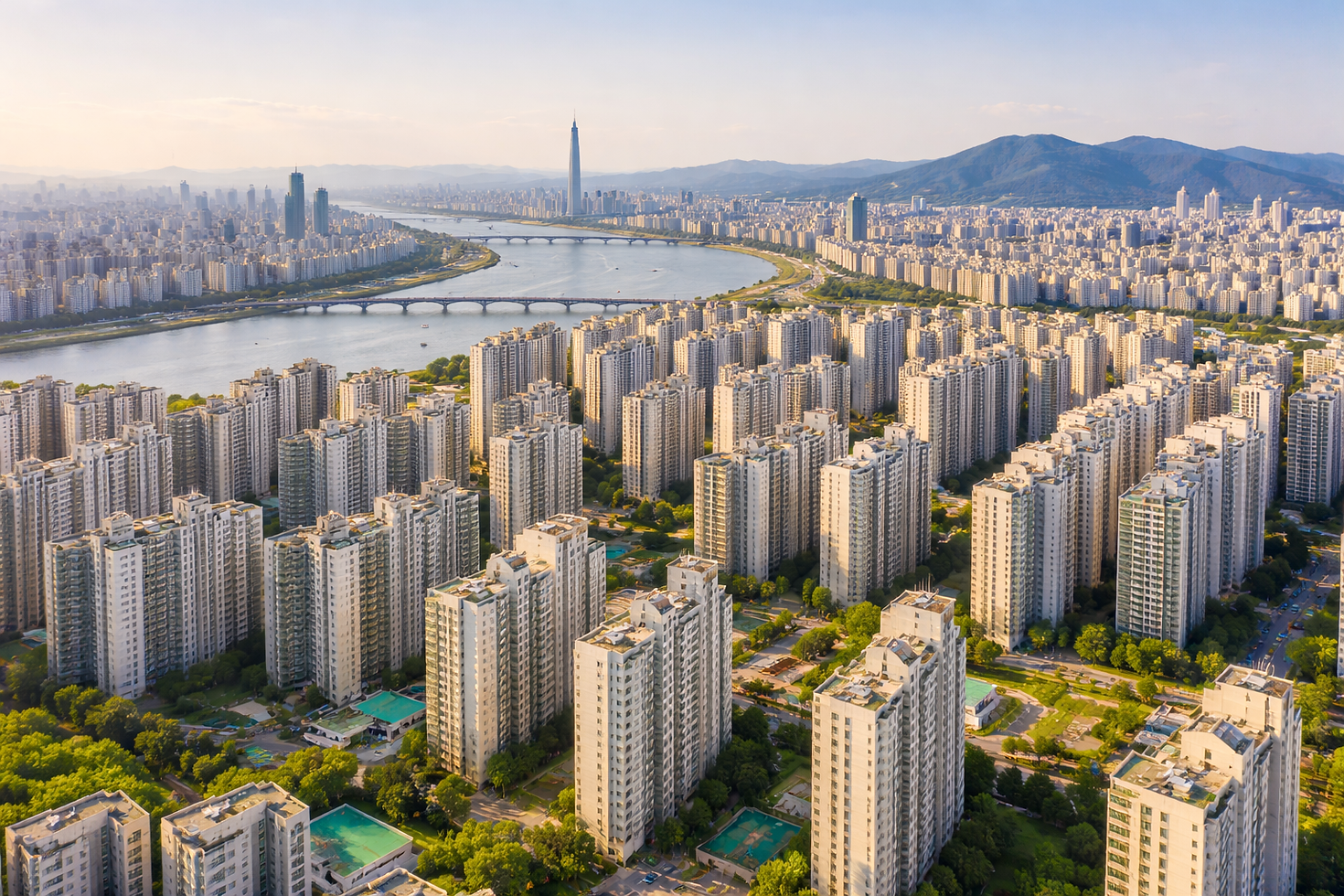
Foreign Homeownership in Seoul Explodes — Up Over 10% in Just One Year
- koreandriven
- Jan 5
- 2 min read
Foreign nationals are purchasing residential properties in Seoul at a rapidly accelerating pace, with ownership transfers rising by more than ten percent in just one year, according to official registry data. The trend is increasingly concentrated in prime districts such as Gangnam and neighborhoods along the Han River, highlighting growing foreign demand in the city’s most expensive housing markets.
Data released by the Supreme Court’s real estate registry system show that foreign buyers filed one thousand nine hundred eleven ownership transfer registrations for collective housing in Seoul last year. This includes apartments, multi-family units, townhouses, and officetels. The figure marks a ten point seven percent increase from the previous year and continues a four-year upward trend.
Nearly forty percent of these purchases were concentrated in Gangnam, Seocho, and Songpa districts, as well as Han River–adjacent areas including Yongsan, Mapo, Seongdong, Gwangjin, and Dongjak. Gangnam District alone recorded the highest number of transactions, followed closely by Seocho and Songpa. Along the river corridor, Mapo and Yongsan emerged as leading destinations.
Market analysts note that these areas have also experienced some of the sharpest price increases in Seoul. According to the Korea Real Estate Board, apartment prices in Songpa rose by more than twenty percent last year, while Seocho and Gangnam posted double-digit gains. Similar price surges were recorded in Mapo and Yongsan.
Experts say the rise in foreign ownership reflects not only investment demand but also an increase in actual residence. Despite tighter regulations on land transactions involving foreign buyers, overall purchases continued to grow, suggesting that housing demand is being driven by a rising number of long-term foreign residents in Korea.
Transaction data by individual districts further support this view. Yeongdeungpo, Guro, and Geumcheon ranked among the top areas for foreign purchases, regions known for established foreign residential communities. In Guro and Geumcheon, more than ninety percent of foreign buyers were Chinese nationals, while Chinese buyers also accounted for more than half of transactions in Yeongdeungpo.
Academics explain that, similar to the formation of overseas Koreatowns, foreign residents in Korea tend to cluster geographically. As businesses expand and assets accumulate, real estate investment often follows, reinforcing local economic networks.
Industry observers expect the trend to persist, citing steady growth in the foreign resident population and improving diplomatic relations in the region. While concerns remain over housing affordability and market concentration, analysts say foreign demand is becoming a structural factor in Seoul’s real estate landscape rather than a short-term anomaly.


Comments